September 21, 2026
Ever feel like your familiar, home-grown company has suddenly become chaotic and mysteriously uncontrollable?
People want pay rises. Managers want more authority. Customers expect more. Everyone seems to need an answer from you… and somehow, you’re still the person who notices the empty printer paper and sorts it out.
You’re working harder than ever, yet the business feels less manageable.
If that sounds familiar, you may have reached the awkward middle stage of becoming a scale up business.
You’re no longer a small start-up where everyone knows everything and decisions happen over a quick conversation in the kitchen. But you’re not a big corporate organisation with layers of support, specialist departments and a process for every possible situation.
You’re in the middle.
And the middle can be uncomfortable.
The strange middle ground of a scale up business
In the early days, informality is an advantage.
You can speak directly to everyone. You know what’s happening with customers. You can make a decision in five minutes. If there’s a problem, you deal with it yourself and move on.
That approach works when the team is small and the business is relatively simple.
But growth changes the equation.
As more people join, you can no longer rely on informal conversations and your own personal oversight. There are more customers, more projects, more responsibilities and more points where information can get lost.
The business hasn’t necessarily become badly managed. It has simply outgrown the way it used to work.
That distinction matters.
You may not have “lost control” at all. You may just be trying to control a larger organisation using methods designed for a much smaller one.
Why growth changes communication and expectations
Growth doesn’t just increase the amount of work. It changes what people expect from the organisation.
When you had five or six people, nobody needed a formal career framework. People could ask you directly about a pay rise, a new responsibility or a problem with a colleague.
As the team grows, those conversations become more complicated.
People want to understand:
- What is expected of me?
- How do decisions get made?
- Who is responsible for this?
- What opportunities are available?
- How does my role contribute to the wider business?
- What happens if something goes wrong?
These are reasonable questions.
The difficulty is that many growing businesses haven’t yet created clear answers. The founder is still carrying most of the information, most of the decisions and much of the vision in their head.
That might have worked before. It won’t work forever.
Communication that once happened naturally now needs to become more deliberate. Not corporate. Not stiff. Just clear.
If you don’t explain what is happening, people will fill in the gaps themselves. That’s when assumptions, frustration and office whispers start to take over.
The answer is structure, but not bureaucracy
There’s a common fear among founders that introducing structure means becoming “corporate”.
It doesn’t.
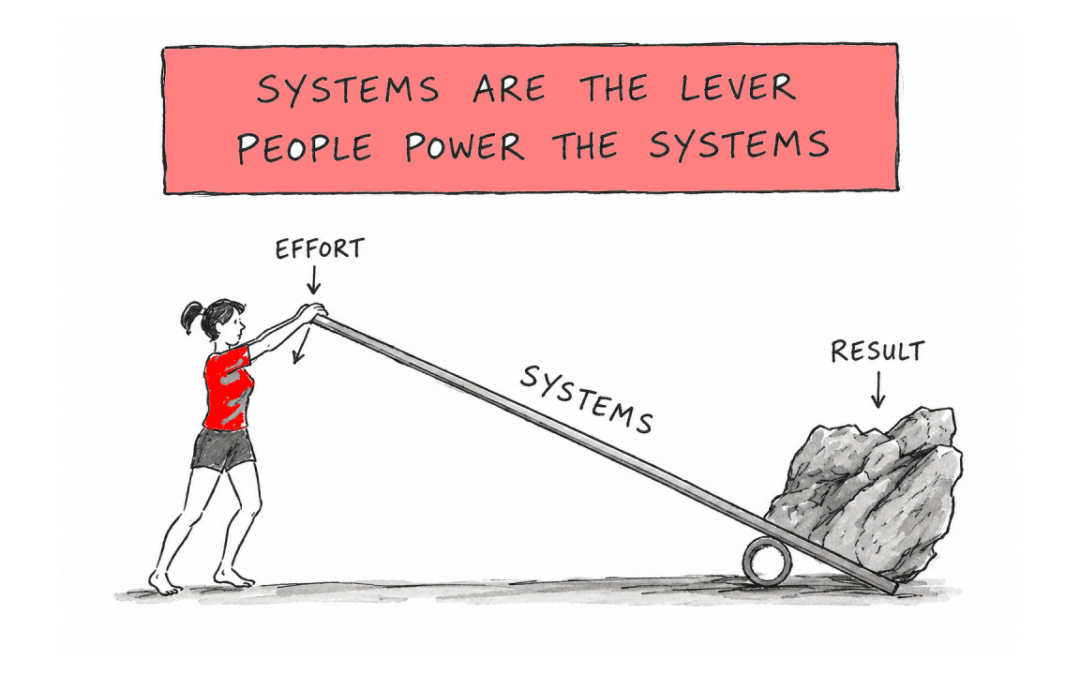
Structure is not the same as bureaucracy. Bureaucracy is unnecessary complexity. Structure is simply creating enough clarity for people to do good work without constantly coming back to you.
A growing business might need:
- Clearer roles and responsibilities
- A simple way to make decisions
- Regular team communication
- Basic processes for important activities
- Consistent expectations around behaviour and performance
- A shared understanding of where the business is going
You probably don’t need five new departments, a 70-page operations manual or a committee to approve every stationery order.
In fact, complexity can make things worse.
The aim is not to build a machine that removes all judgement.
The aim is to create a business that can function well even when you’re not standing in the middle of it.
1. Work on the business, not only in it
This is one of the oldest pieces of business advice around, and one of the easiest to ignore.
When the business is growing, there is always something urgent to do. A customer needs a response. A project needs rescuing. Someone is off sick. A supplier has made a mistake.
So you keep jumping back into the detail.
Before you know it, you are spending every day solving immediate problems and very little time thinking about the organisation you are building.
Your role has changed.
You may still need to get involved in the day-to-day work, but you also need time to think about:
- What capabilities will we need next year?
- Where are decisions getting stuck?
- Which responsibilities still depend on me?
- What is becoming too complicated?
- Which people are ready for more responsibility?
- What must remain consistent as we grow?
Put time in the diary for this work. Treat it as seriously as a client meeting.
If you only work in the business, the business will keep demanding that you work in it.
2. Stop doing everything yourself
This is often the hardest shift.
Founders are usually capable people. They have built the business by being useful, responsive and willing to get stuck in. They know how things should be done, and they often believe it will be quicker to do something themselves than explain it to someone else.
Sometimes they’re right… in the short term.
But if you keep doing everything, you create a business that depends on you for almost everything.
That isn’t control. It’s dependency.
Delegation is not simply handing over a task. It means giving someone the responsibility, context and authority to take ownership of an area of work.
That may involve mistakes. It may not be done exactly as you would do it. You may have to bite your tongue occasionally (not easy, I know!).
But people cannot develop judgement if they are never allowed to use it.
Start by identifying the decisions and activities that genuinely need your involvement. Then look at everything else.
What can someone else own?
What information do they need?
What boundaries should they work within?
What does good look like?
That is how you begin to build a team that carries the load with you.
3. Share the vision until people can see it too
A vision that exists only in the founder’s head is not a shared vision.
Your team cannot support a destination they cannot see.
You don’t need a glossy strategy document filled with fashionable language. You need to be able to explain, plainly:
- Where are we going?
- Why does it matter?
- What are we trying to build?
- What will success look like?
- How does each person contribute?
Then you need to talk about it. Regularly.
Not once at the annual away day and then never again. Use team meetings, one-to-ones, project discussions and everyday decisions to connect the work back to the bigger picture.
People want to know that their work matters. They want to understand the reason behind the priorities, not just receive a list of instructions.
When people understand the purpose, they can make better decisions without waiting for you to provide every answer.
That is the point at which the vision starts opening doors rather than sitting on a shelf.

4. Introduce simple, scalable processes
You do need processes as you grow.
The trick is to introduce the right processes at the right time.
Start with the activities that cause the most confusion, delay or inconsistency. For example:
- How new work is handed over
- How customer issues are escalated
- How invoices are raised
- How new people are onboarded
- How decisions are recorded
- How priorities are communicated
Map the process in plain English. Who does what? In what order? What happens if something goes wrong?
Keep it short enough that people will actually use it.
A good process should make work easier, not make people feel as though they need permission to breathe. Every approval, form and meeting should earn its place.
Ask yourself:
Does this process improve clarity, quality, speed or accountability?
If it does none of those things, it may be process for process’s sake.
The best scale up businesses are often surprisingly simple. They have clear expectations, sensible systems and short communication lines. They don’t confuse maturity with complexity.
5. Build a team that can carry the load
As your organisation grows, technical expertise is not enough.
You need people who can communicate, make decisions, handle difficult conversations and take responsibility when things don’t go to plan.
That includes managers.
A brilliant technician is not automatically a good manager. Someone who has been with you for years may understand the business brilliantly but still need support to lead other people well.
Be clear about what management involves in your organisation. It may include:
- Holding regular one-to-ones
- Setting clear expectations
- Giving useful feedback
- Addressing poor performance
- Supporting development
- Making decisions within agreed boundaries
- Communicating priorities consistently
These are skills that can be learned. They should not be left to chance.
If you want a sustainable business, make those expectations visible.
6. Keep listening as the business changes
Your instincts got you this far, so don’t ignore them now.
If something feels out of control, listen to that feeling. It may be telling you that a role is unclear, a decision is stuck, a process is failing or a conversation has been avoided for too long.
But don’t rely on instinct alone.
Ask your team what they are experiencing. Where are they waiting? What is frustrating them? Which decisions are unclear? What information do they need more often?
People buy from people, and businesses grow through people. You won’t create a strong scale up business by designing everything from behind a desk.
Talk to the people doing the work.
They will often show you where the next door needs opening.
Final thought: growth requires a different kind of control
Your business growing is good news.
But growth changes the leadership job. You can no longer be the person who knows everything, approves everything and solves everything.
Real control is not having your hands in every task.
It is having enough clarity, trust and structure for the right people to make good decisions without you hovering over them.
You need to work on the business, share the vision, delegate properly and create simple ways for people to communicate and take responsibility.
It won’t happen overnight. You will let go too slowly in some areas and too quickly in others. You’ll introduce a process that nobody uses, then discover a simple conversation would have solved the problem.
That’s normal.
The aim is not perfection. It is progress.
You’re not losing control.
You’re learning how to share it.