
What’s in a job title?
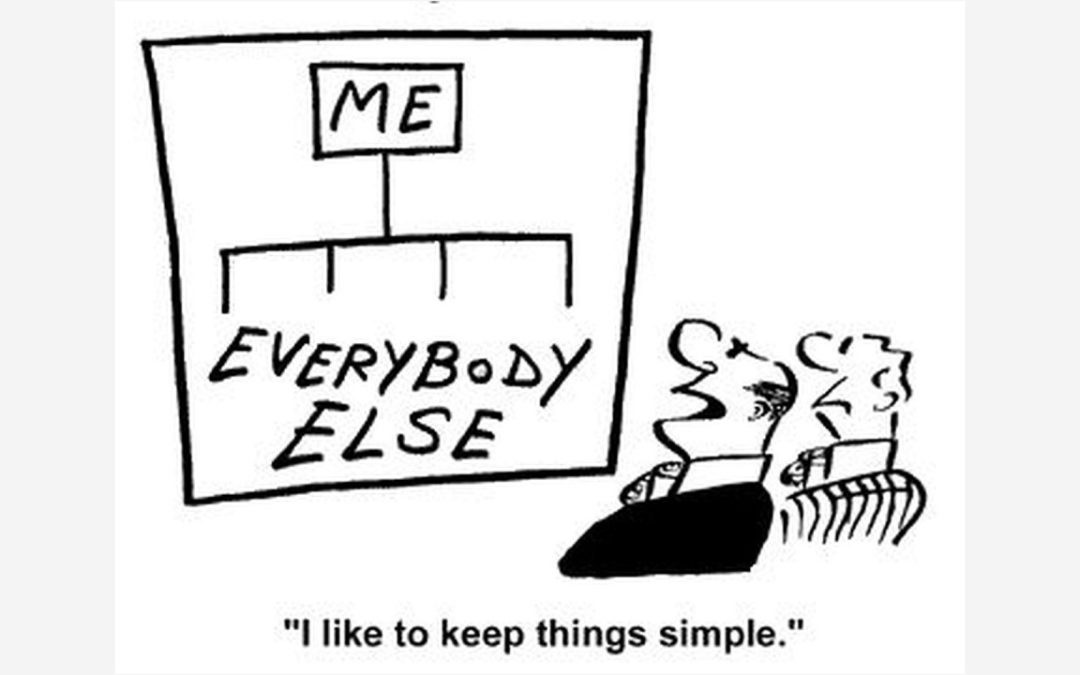
Quite a lot, as it turns out – especially in smaller companies, where inflated titles are often handed out like party favours. I see it all the time: a long-serving team member becomes “Head of Design” after a particularly good quarter, or someone is rebranded as “Operations Director” because they asked for a pay rise and it felt easier to tweak the job title than restructure the organisation.
In the moment, it can feel like a harmless morale boost. But over time, this habit of job title inflation creates some very real problems, especially for fast-growing businesses trying to move from the informal, founder-led stage to something more sustainable and structured.
Let’s explore what happens, and why it matters.
When titles inflate, clarity goes out the door
The first problem with job title inflation is that it muddies the waters. You end up with people whose roles sound important but whose actual deliverables are unclear – or worse, overlapping.
One client I worked with had five different people with “Director” in their title. One was a shareholder. One had been promoted in name only. One had no line management responsibility at all. When we mapped out the accountabilities, it was clear that some tasks had three owners, and others had none.
No wonder the MD felt stuck in the middle of everything.
From start-up instincts to scale-up structure
Job title inflation is often a hangover from what I call the first phase of organisational growth – what I sometimes refer to as the start-up mindset. In this phase, the business is built around people’s preferences, not the organisation’s needs.
The logic goes like this: “You’ve been here a long time; you’re loyal; let’s make you Head of Something.” Or: “You’re really good at that client relationship; let’s give you a new title to reflect that.”
But this only works for so long. As your organisation grows into the scale-up phase you have to make a mindset shift. Roles can no longer be designed around individuals. They have to be defined around what the organisation needs in order to grow.
That means every role should:
- Have clearly defined accountabilities.
- Deliver specific outputs that can be measured.
- Fit within a coherent structure alongside other roles.
- Be earned – by capability, not tenure, relationship or aspiration.
The long-term cost of inflated titles
Job title inflation doesn’t just confuse things. It creates a top-heavy structure where:
- People feel entitled to make decisions they’re not qualified for.
- Work falls between the cracks (“That’s beneath my level now…”).
- New recruits are hard to place because the hierarchy makes no sense.
- Pay expectations rise faster than value delivered.
In the worst cases, it becomes impossible to reorganise. You can’t unpick the mess without upsetting people, damaging morale or triggering a political crisis.
When family ties (or shareholder stakes) cloud the picture
This isn’t just a problem of internal promotions gone awry. In family-owned or employee-owned businesses, there’s a particular challenge when ownership and executive leadership are treated as the same thing.
Just because you’re a shareholder, a partner, or part of the founder’s family doesn’t automatically mean you should be Commercial Director or Head of HR. These roles come with specific deliverables – and need people with the aptitude, experience and headroom to deliver them.
One of the key mindset shifts in mature businesses is understanding that ownership and executive responsibility are two different things. Blurring the two leads to confusion, power struggles and poor performance – not to mention a bottleneck when succession planning is needed.
Promotion is not a reward – it’s a new responsibility
This might be the most important point of all.
In growing businesses, promotion isn’t a gold star. It’s not a way of saying “thanks” or “you’ve been here a long time” or “we want to keep you.”
It’s a new contract with the organisation: “You now hold this role. These are the accountabilities. Here’s how success will be measured.”
And with that comes clarity – for the individual, for their peers, and for the business as a whole.
From job titles to real roles: what to do instead
So how do you avoid the trap of job title inflation and build a structure that actually helps your business grow?
- Define roles around accountabilities, not personalities Start by mapping what the organisation actually needs. What are the critical deliverables? What roles are required to deliver them?
- Clarify success measures Each accountability should come with a way of knowing whether it’s being delivered. That could be a number, a deadline, or a quality indicator, but it needs to be specific.
- Create clear interfaces between roles Every role should make sense alongside the others. No overlaps. No gaps.
- Separate reward from promotion You can show appreciation and increase pay without changing someone’s title or role. Promotion should only happen when the person is ready, and the organisation needs it.
- Be honest about leadership roles Whether you’re a family member, a founder or a shareholder, leadership is something you earn through capability, not inheritance.
Final thought
Your business doesn’t need more inflated job titles. It needs clarity, accountability and structure.
So the next time someone asks for a promotion, ask yourself: are you solving a real organisational need or just giving them a label to keep them happy?
If it’s the latter, think twice. Your future self (and your leadership team) will thank you.